
You’ve landed your first serious job. Now what?
You’ve landed your first serious job. Now what?
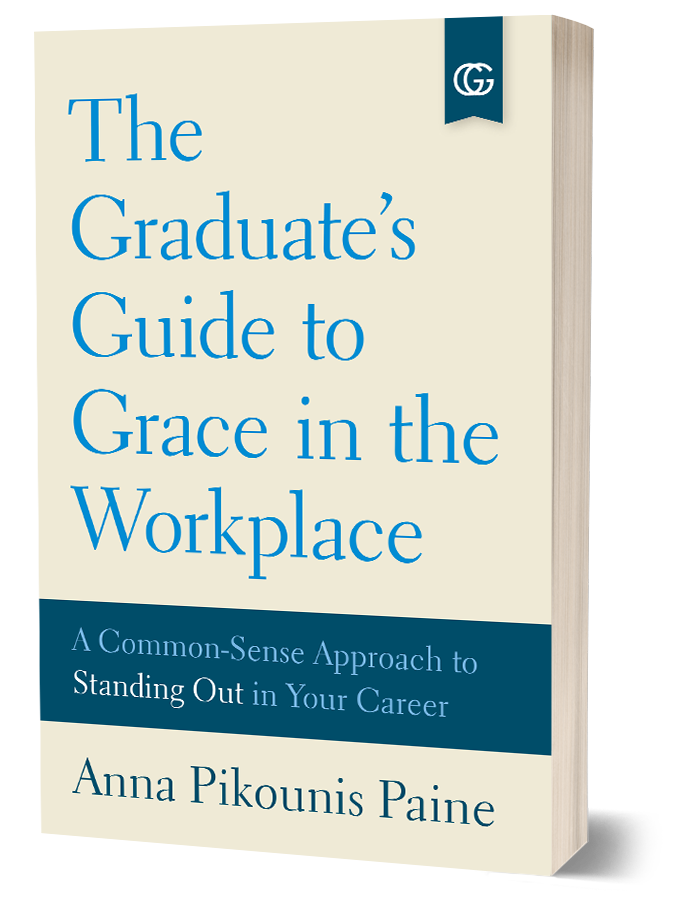
Whether you’ve earned a certification, finished your undergraduate degree, or completed your master’s program, your biggest competitive advantage when it comes to your new career is common sense. While most schools don’t teach their students how to thrive in the “real world,” there’s no need to worry—The Graduate’s Guide to Grace in the Workplace is the road map you’ve been looking for.
Filled with straightforward advice and scenarios you’ll actually face, this helpful guide will coach you through everyday interactions that build trust, earn respect, and open doors to advancement. With practical knowledge—and zero fluff—learn how to:
Make strong first impressions
Position yourself as a trusted team member
Develop relationships that last
And more!
Whether you’re preparing to start your career or settling into your first role, The Graduate’s Guide to Grace in the Workplace is the perfect companion to help you shine in your job and grow your career with confidence.
Buy the Book
Reviews
“The Graduate’s Guide to Grace in the Workplace: A Common-Sense Approach to Standing Out in Your Career gives new graduates a handbook to taking next steps into the work world, exploring the basics of office politics, gigs, becoming indispensable at work, and adopting the basic processes of business savvy.
This is an especially valuable approach, given that new grads may not know some of the etiquette or best practice basics usually gained only through trial and error:
A firm handshake with a sincere greeting is a must. The handshake is the first sign of confidence and professionalism during an introduction, along with a sincere ‘It’s a pleasure to meet you.’ And please, no waving in lieu of the handshake when there are multiple introductions. Step forward, backward, around—whatever it takes to greet everyone with a handshake.
From accepting or declining an invitation to a boss’ party to understanding how to make great first impressions, exhibit confidence and business savvy, and understand the wellsprings of typical miscommunications, The Graduate’s Guide to Grace in the Workplace covers common and extraordinary circumstances alike. It offers many concrete examples of interactions that can either propel a new worker to better relationships and business heights or quash a career before it gets off the ground.
These many examples and discussions place The Graduate’s Guide to Grace in the Workplace at the top of books that can be given to new grads just entering the job market, making it a perfect choice for libraries interested in recommending practical guides to new young workers.
College and high school grads alike will find The Graduate’s Guide to Grace in the Workplace equally invaluable for its thought-provoking insights into how a workplace operates and how effective business relationships are built.
Filled with important questions and answers about everything from raises and management positions to daily job interactions and choices, The Graduate’s Guide to Grace in the Workplace should be on the reading lists of anyone of any age just beginning a career or entering the job market.”
—Midwest Book Review
“With its blend of practical tools and psychologically astute guidance, The Graduate’s Guide to Grace in the Workplace is an essential career guide.
Anna Pikounis Paine’s edifying professional development guide The Graduate’s Guide to Grace in the Workplace aims to help nascent professionals conduct themselves in a professional manner in the workplace.
Built around the proprietary HMWK framework—an acronym for humility, manners, work ethic, and kindness—this book argues that technical competence alone cannot secure career longevity. Instead, it redefines workplace culture through values and interpersonal dynamics, elevating the HMWK mantra as both the foundation for professional conduct and the link between academic achievement and workplace thriving. A mentorship persona is introduced as a guide, used to foster a sense of trust and approachability stemming from more than three decades of frontline workplace experience across diverse settings.
The book’s tripartite architecture focuses on three impressions—the first, next, and last. These mirror the natural arc of early career development. This structure is intuitive and accessible for graduates transitioning into professional life, providing them a temporal ‘plotting’ that moves through workplace initiation, adaptation, and long-term growth. It equips people to sidestep common missteps and thrive in workplace environments.
Indeed, the book’s frameworks are practical and well explained, with its direct language rooted in common-sense ideals. For example, workplace etiquette is reframed not as an elitist code but as a competitive advantage that is essential for job security. Still, the guidance leans toward traditional corporate environments, making it less tailored for nontraditional roles that require deeper theoretical scaffolding.
Citations of the National Center for Education Statistics and business studies ground the book’s advice in credible data. Still, its core emphasis rests on reflective wisdom and lived experience rather than documented scholarship. Further, the book’s progression is logical and accessible, moving from foundational concepts to applied workplace scenarios with ease. Within this mix, each chapter functions as a self-contained module, ideal for quick reference during real-time workplace dilemmas. Tools and prompts appear throughout to assist with practical application, including a powerful self-reflection exercise that addresses and illustrates intergenerational healing.
Straightforward in style yet enlivened by flourishes of wit and personal vulnerability, the prose carries distinctive appeal. Humor appears, as with the playful use of ‘Ew!’ Further, Paine’s reflections are candid, helping build rapport, as when she recalls being young and thinking, ‘I was ready to go away to college and leave this part of my life in the rearview mirror.’ Throughout, unspoken workplace expectations are translated into explicit, actionable guidance, conveyed with warmth and without condescension.
The Graduate’s Guide to Grace in the Workplace is a warm, principle-centered career guide for graduates navigating unfamiliar terrain.”
—Foreword Clarion Reviews
“Paine’s pathway to achieving professional success begins with the profound act of self-reflection, as she urges readers to evaluate ‘who [they] are today, and who [they] really want to be going forward.’ She introduces the HMWK acronym—humility, manners, work ethic, and kindness—and encourages her audience to apply those values to the workplace, emphasizing the importance of accountability, treating others with grace, and being willing to put in the hard work necessary to achieve goals. Intending to fill the gap between education and preliminary employment, Paine outlines the difference between workplace performance and behavior (performance is measured in hard results, while behavior is more subjective), aiming to equip entry level professionals with the skills to excel in both.
Much of Paine’s advice centers on the adage that ‘common sense may not necessarily be common knowledge.’ She covers basic capacities—dressing professionally, maintaining eye contact, keeping your workspace clean, establishing boundaries between work and personal life—before delving into ways to truly stand out, such as taking the initiative to creatively solve on-the-job problems or welcoming the opportunity to use technological advancements. The advice is practical and easy to implement, and Paine concludes the guide with a section detailing how best to leave employment, noting that this is an inevitable point for those determined to climb the career ladder. ‘Leaving gracefully can protect your reputation, preserve valuable relationships, and even open doors to future opportunities,’ she writes.
Paine’s concise, to-the-point chapters conclude with key takeaways to keep readers moving in the right direction. Some moments feel overdone—such as the reminders to complete daily oral hygiene or avoid wearing dirty clothes to the office—but overall, this is a supportive, useful foundation for career success. Paine’s inclusion of the handwritten letter she wrote to her father, thanking him for the sacrifices he made to raise his family, is a striking tribute in an all-too-calloused business world.”
—BookLife Reviews